You’ve built a life here. Maybe you’ve been a Permanent Resident for years, your kids go to school here, and you’ve started dreaming a little bigger — a proper garden, a car porch, your own gate instead of a shared corridor. Then you start reading up on terrace houses and bungalows, and the rules start looking… complicated. Some sites say you need special approval. Others hint it’s basically impossible. So what’s actually true?
Here’s the honest, straightforward answer — and a genuinely useful workaround that most people never hear about until someone tells them directly.
The short answer: technically yes, practically very rarely
Singapore’s landed residential property — terrace houses, semi-detached homes, bungalows, and Good Class Bungalows (GCBs) — is protected under the Residential Property Act. Singapore Citizens can buy it freely. Permanent Residents, however, need approval from the Singapore Land Authority (SLA) before they can purchase most types of landed housing.
Here’s the catch: that approval exists on paper, but it’s rarely granted in practice for standard landed homes like terrace houses, semi-Ds and bungalows. So while the door is technically open, it’s a door that almost never opens for most PR applicants.
GCBs: completely off the table
If you’re a PR (or a foreigner) hoping for a Good Class Bungalow specifically, it’s worth knowing plainly: GCBs are off-limits, full stop, regardless of any SLA application. This is Singapore’s most exclusive housing category, reserved entirely for Singapore Citizens. No approval process, no exception — it simply isn’t available to non-citizens.
The workaround nobody tells you about: cluster housing
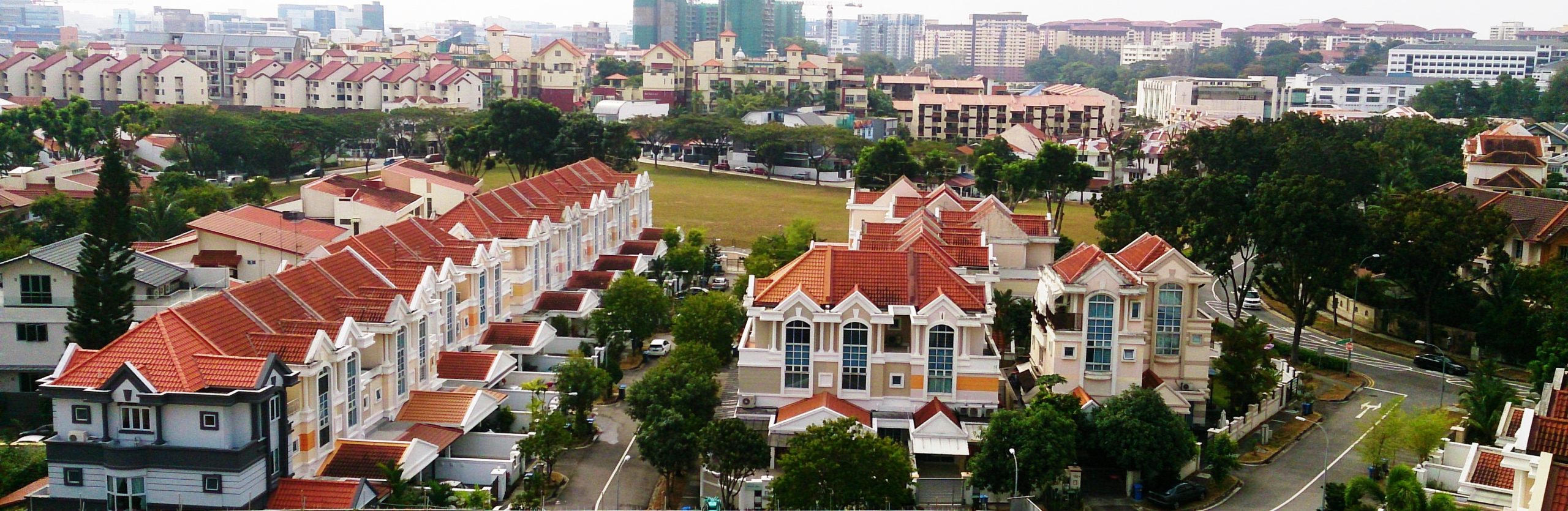
Here’s the part that changes everything for a PR who still wants that landed feel. Cluster houses are a wonderful hybrid — architecturally, they look and live like landed homes: your own private garden, a car porch, sometimes even a small pool, arranged in a low-rise, landed-style layout. But legally, they’re built on a strata title, the same ownership structure as a condominium.
That single legal difference changes everything. Because a cluster house is strata-titled, it’s treated as a condominium under the law — which means it falls entirely outside the Residential Property Act. No SLA approval needed. No near-impossible waiting game. A PR can simply buy one, the same straightforward way they’d buy any private condo.
Why cluster housing is such a lovely middle ground
Beyond the legal shortcut, cluster housing genuinely earns its own appeal:
- The landed lifestyle, without the landed hurdles. Your own front door, garden, and sense of space and privacy — without navigating SLA approval.
- Condo-style conveniences, often included. Many cluster developments come with shared facilities — a pool, gym, function room, and estate security — since they’re built and managed as a gated development, not a standalone house.
- A genuinely rare category. Cluster housing developments don’t come up often, so if the lifestyle appeals to you, it’s worth keeping an eye on new launches and resale listings rather than waiting for the “perfect” one.
One important thing to budget for: ABSD still applies
Here’s a detail worth being clear-eyed about. Unlike some property categories (industrial and commercial property, for instance, sit outside the Residential Property Act and outside ABSD), a cluster house is still private residential property in every other sense. That means the usual Additional Buyer’s Stamp Duty rates for PRs apply — 5% on a first property, climbing steeply from there on subsequent purchases. The RPA exemption solves your eligibility problem, not your stamp duty bill, so budget accordingly.
So, what should you actually do?
If you’re a PR and your heart is set on a genuine terrace, semi-D or bungalow, know going in that an SLA approval is a long shot — worth trying only if your circumstances are unusual, and best discussed honestly with a property lawyer before you get attached to a specific home. If a GCB is the dream, it’s simply not accessible while you remain a PR; that one only changes if you become a Singapore Citizen.
But if what you’re really chasing is the feeling of landed living — space, privacy, your own patch of garden — a cluster house may be the answer you didn’t know existed. It’s fully within reach, no special approval required, just the normal private-property process (and the normal ABSD) that comes with it.
(This is a friendly overview to help you understand your options, not legal or financial advice — SLA approval processes and ABSD rates can change, so do confirm current rules with a property lawyer or your agent before making plans.)
The path to a landed-style home isn’t as shut as it first appears. Sometimes the door you’re pushing on is the hard one — and there’s a much easier one right beside it. You’ve got this.