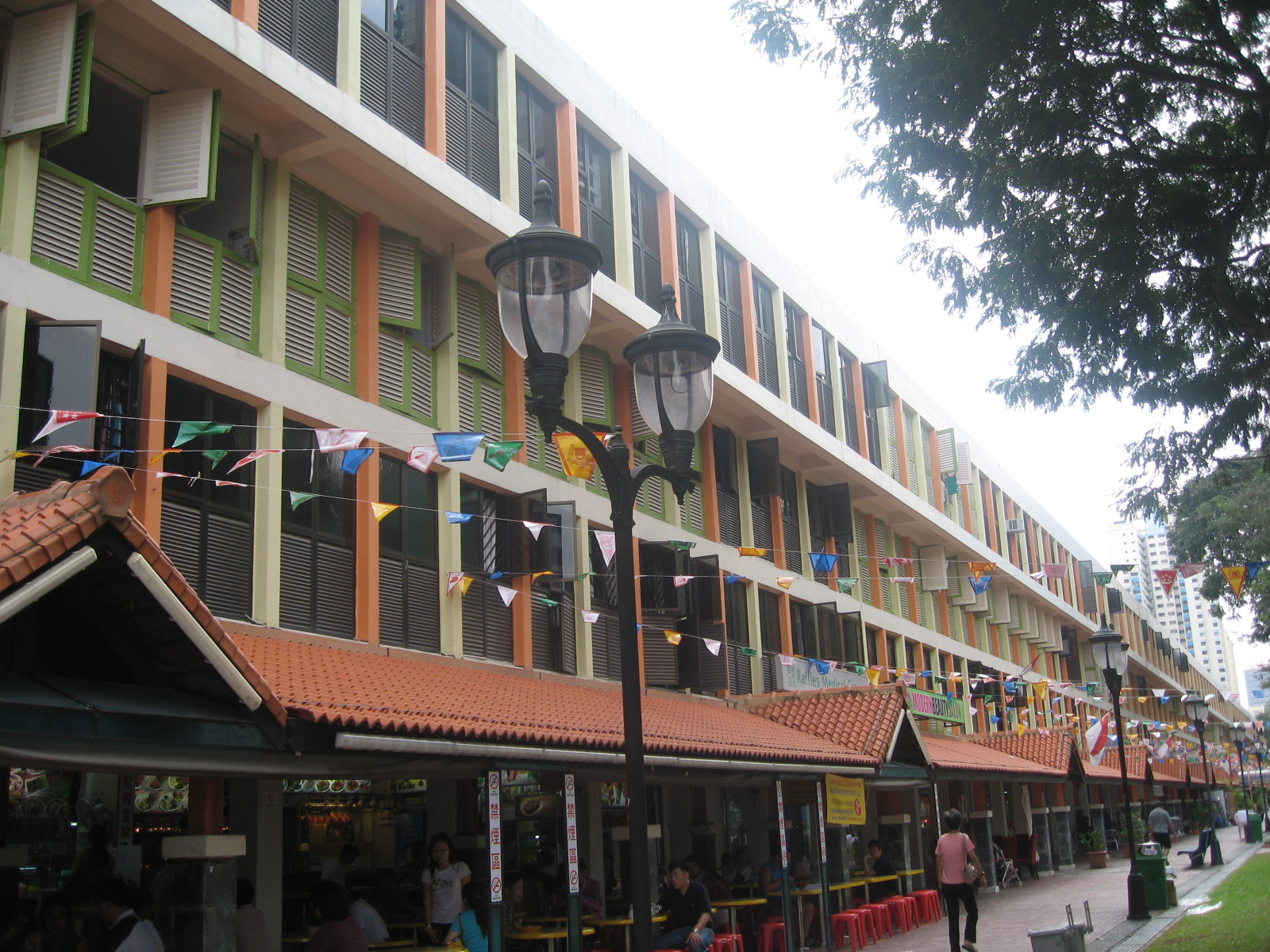
Stand in Toa Payoh today and it feels like it has always been here. The HDB Hub humming with people, the old dragon playground that everyone’s parents seem to have a photo beside, the wet market, the MRT, the quiet confidence of a place that’s lived in. It’s easy to forget that, once upon a time, this was the frontier — Singapore’s very first “new launch,” built on a drained swamp, the place the whole country was watching.
Every mature town you love today was once that frontier. And if you’ve ever wondered where the next one is — where tomorrow’s amenities, MRT lines and growth stories are quietly being laid down — it helps to know the path the country has walked. So let’s take that walk, decade by decade.
The 1960s: it started in a swamp
Toa Payoh — “big swamp” in Hokkien — was the HDB’s first town planned and built from a clean slate, with work starting in 1965. Queenstown came earlier, but it was begun by the colonial-era Singapore Improvement Trust; Toa Payoh was the first that was wholly HDB’s own. It became the template: neighbourhoods clustered around a town centre, shops, schools, jobs, all within reach. Queen Elizabeth II famously visited in 1972. Everything that came after borrowed from this blueprint.
The 1970s: pushing outward
With a national plan in place, the focus moved further from the city. Ang Mo Kio broke ground in 1973 as the seventh new town, with Bedok rising the same year, Marine Parade emerging on reclaimed land from 1974, and Clementi following in 1976. This was the era of the “prototype” town, repeated and refined across the island.
The 1980s: the great expansion
Then came the building boom. In the early 1980s, HDB launched a whole cluster of towns at once — Bukit Batok, Jurong East and West, Serangoon, Tampines and Woodlands — followed by Bishan, Bukit Panjang, Choa Chu Kang and Pasir Ris before the decade was out. If you grew up in one of these, your childhood playground was once a construction site full of promise.
The 1990s: the north-east frontier
By 1990, Singapore had 20 new towns. The focus swung north-east, with Sengkang and Sembawang maturing into full towns, and Punggol joining the list in 1999 — soon to be reimagined as a breezy waterfront town under the “Punggol 21” vision.
The 2000s–2010s: greener, smarter, and brand-new estates
Somewhere along the way, the goal shifted from simply housing people to delighting them. Towns became greener, more walkable, more distinctive. Bidadari — a brand-new estate carved within Toa Payoh — saw its first flats launched in 2015. Tengah was unveiled in 2016 as the 24th HDB town and Singapore’s first car-lite “Forest Town,” ultimately planned for up to 42,000 homes. Over in the north-east, the Punggol Digital District began taking shape, weaving homes and jobs together.
The 2020s to today: the return to the water (and the city’s edge)
Which brings us to now — arguably the most exciting chapter yet, as the focus circles back toward the sea and the city fringe:
| Era | Where the focus was |
|---|---|
| 1960s | Toa Payoh |
| 1970s | Ang Mo Kio, Bedok, Clementi, Marine Parade |
| 1980s | Tampines, Woodlands, Jurong, Bishan, Pasir Ris |
| 1990s | Sengkang, Punggol, Sembawang |
| 2010s | Bidadari, Tengah, Punggol Digital District |
| 2020s | Greater Southern Waterfront, Mount Pleasant, Bayshore, Jurong Lake District |
The headline acts today are transformational. The Greater Southern Waterfront launched its first-ever BTO in October 2025 on the old Keppel Club site — the new Berlayar estate — part of an eventual 10,000 or so homes by the sea. Mount Pleasant, on the former Old Police Academy grounds, launched its first BTO the same month, with around 5,000 flats to come. Bayshore is rising as a new East Coast waterfront township, while Jurong Lake District is being built up as Singapore’s second CBD. Even long-quiet pockets like Lakeview and Shunfu are getting their first new public housing in over 40 years. And further out lie Kampong Bugis, Marina South, Pearl’s Hill, and — after 2030 — the vast Paya Lebar Air Base.
The lovely full-circle moment
Here’s the detail that makes me smile. Both Bidadari and Mount Pleasant — two of the most sought-after new estates of the last decade — sit within Toa Payoh. Six decades after HDB planted its very first town on that swamp, the spotlight has swung right back to where the whole story began.
So what does this mean for you?
Beyond the nostalgia, there’s a genuinely useful thread here for any buyer. Development focus is where the future gets built first — the new MRT lines, the parks, the jobs, the malls, and, over time, the value. The areas in the spotlight today (the waterfront precincts, Tengah, Jurong Lake District) are where today’s more patient buyers are positioning for tomorrow’s growth, usually at gentler entry prices than the already-matured towns. The flip side is that maturity has its own quiet rewards — proven amenities, established communities, and the kind of liveability that only time can grow.
Neither is “better.” The point is simply this: when you understand where Singapore is choosing to build next, you can see your own purchase not as a gamble, but as a place on a map the country has been drawing, carefully, for sixty years. (This is a friendly perspective, not financial advice — where you buy should always come down to your own life and budget.)
Wherever you end up planting your roots, you’re joining a story that started in a swamp and runs all the way to the sea. Not a bad story to be part of. You’ve got this.